Best Career Path to Become a Graphic Designer After 12th

Choosing a career after 12th is more confusing than choosing a romantic partner in today’s time. But at this point, most students know one thing for sure: They don't want to be stuck in a career that's boring, repetitive, or disconnected from their interests. If you are the kind of person who enjoys being creative, likes visuals, social media, colours, layouts or being able to tell a story with images, then graphic design can be a great and rewarding career choice for you.
What many students don't realise is that graphic design is no longer about making posters or logos. Today, graphic designers are in the midst of branding, digital marketing, UI/UX design, content creation, advertisement and even product design. With the shift of businesses to online, the need for skilled graphics designers is increasing gradually in India and worldwide.
If you are thinking about what the right career path is after 12th before becoming a graphic designer, this guide will help you understand your choices clearly and decide whether being a graphic designer is right for you.
Understanding Graphic Design as a profession
Graphic design is the art and skill of communicating ideas graphically. A graphic designer uses typography, colours, images, and layouts to create designs that inform, engage, or even persuade an audience. From Instagram graphics and websites to brand and packaging, graphic design is everywhere.
One important thing to understand before jumping right in is that graphic design is a skill-based career. Degrees and diplomas do help, but what matters in the industry is your ability to design, think creatively, and solve visual problems. That is why choosing the right course of study after 12th becomes so important.
Can You Become a Graphic Designer After 12th From Any Stream?
Yes. One of the biggest advantages of graphic designing is that you can go for it after 12th from any stream ( Arts, Commerce, or Science). Most Graphic designing courses are based on your creativity and skill sets rather than your academic background.
It doesn’t matter whether you studied maths, biology, economics or humanities, you are eligible to enter the field as long as you meet the basic requirements for the courses and are skilled with the right perspective.
The Two Main Career Paths After Class 12
After the completion of 12th, there are generally two structured options that students can opt for in order to get into the graphic designing field. One is a diploma in graphic design and the other is the bachelor of graphic design. Both paths can have successful careers, but they have a slightly different purpose.. Knowing this difference will help you decide your career path.
Diploma in Graphic Design After 12th
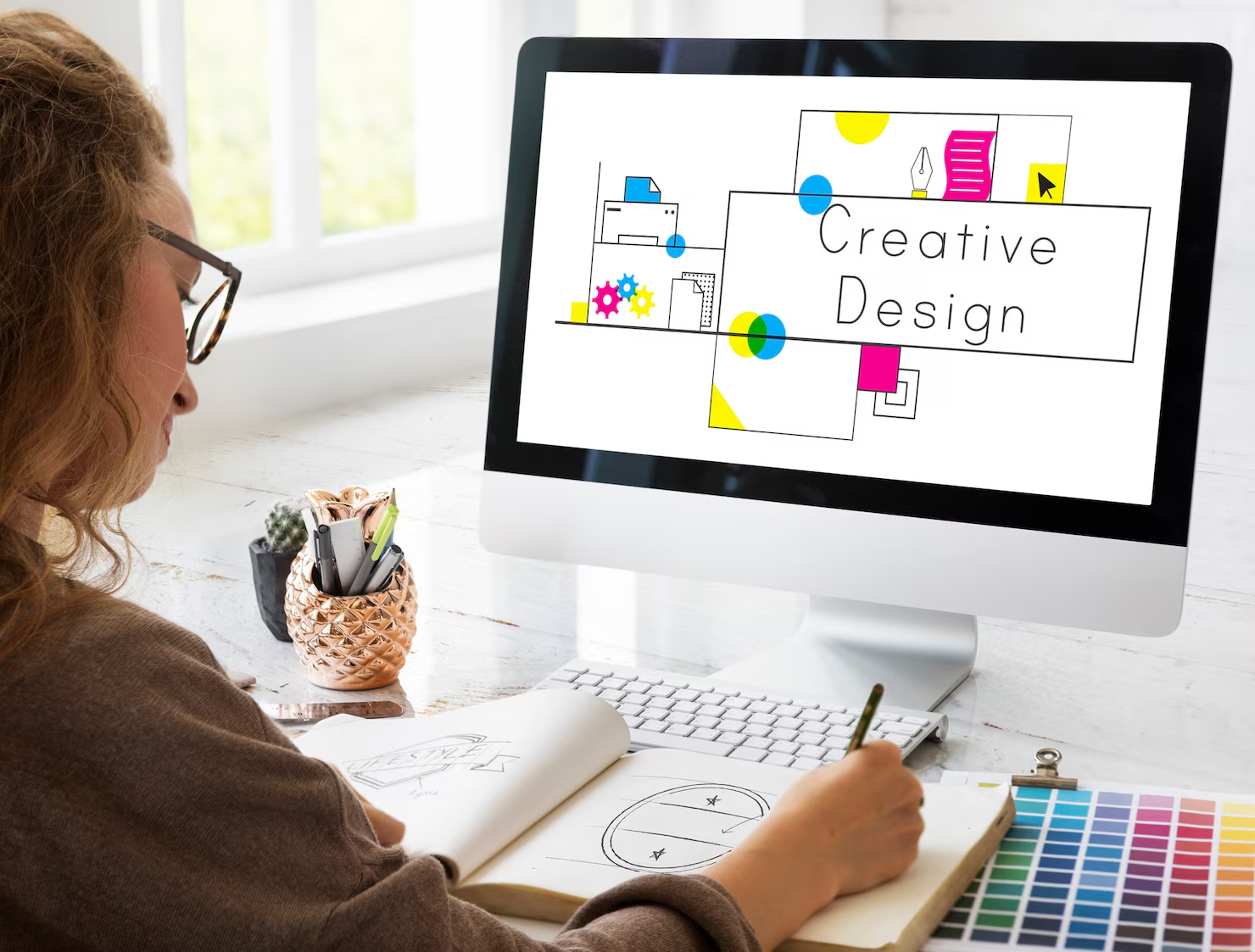
A diploma in graphic design is one of the most popular options for students who would like to enter the creative industry fast. Diploma courses are skill-oriented and industry-related, which make them ideal for students who prefer to learn by doing theory-heavy subjects.
Diploma in Graphic Design Eligibility
The criteria required to be eligible for a diploma in graphic design are usually simple. Most institutes want the students to have passed 10+2 from a recognised board. There is often no restriction on streams but in many cases, no minimum percentage requirement either. This makes diploma courses available to a large number of students.
Some of the private institutes may conduct/prefer design aptitude tests like AIDAT (All India Design Aptitude Test) or interviews but in many institutes they offer direct admission on the basis of 12th qualification.
What You Learn During a Diploma Course
Diploma-level graphic design courses emphasise solid fundamentals. Students learn to use industry-standard software, understand design principles, and create real-world projects. The focus is more on practical training and less on academic theory.
When pursuing this course, students are trained in visual design basics, branding concepts, digital and print design, and portfolio development. By the end of the course students usually become job-ready.
Diploma in Graphic Design Colleges in India
There are numerous diplomas in graphic design colleges all over India like private design institutes, media schools as well as skill development academies. While selecting a college, students must not just be focused on the fees or brand name. What really matters is the quality of the teaching, hands-on exposure, faculty experience, and placement or internship support.
Remember, a good diploma college helps students to build a robust portfolio, which is much more valuable than a certificate in the design industry.
Bachelor of Graphic Design

For students who want to have a deeper understanding of design and are interested in pursuing a long-term career that is backed up by academic support, a bachelor of graphic design is a great option. This is a full-time undergraduate degree programme, typically three to four years in length.
A bachelor's degree is a broader degree with exposure to design theory, research and multiple design specialisations. It is particularly useful for students who wish to work with large organisations, do higher studies or explore global opportunities in the future.
Eligibility for Bachelor Of Graphic Design
To pursue bachelor of graphic design, students must have passed 10+2 from a recognised board. Some universities require a minimum percentage, while others focus more on entrance exams and aptitude tests.
In contrast to diploma courses, degree courses may have a more structured admissions process.
Graphic Design Entrance Exam
Many reputable colleges and universities conduct a graphic design entrance exam as part of their admissions process. These exams are not meant to test a student's academic knowledge but to assess their creative thinking.
A typical Graphic design entrance exam tests visual reasoning, creativity, basic drawing skills, design aptitude, and logical thinking. Some institutes also do personal interviews or portfolio reviews.
It is important to note that not all graphic design courses include an entrance exam. Several diplomas in graphic design colleges and private institutes provide direct admission in it. But it is better to take a national-level design entrance test to ensure you find the right design institute and avail a scholarship (if eligible).
What Do You Study in a Bachelor of Graphic Design Course?
A bachelor of graphic design programme is a more comprehensive curriculum. Students learn about visual communication, typography, colour theory, branding, advertising design, user interface basics and design thinking.
Unlike short-term classes, a degree programme also involves concept development, research, and understanding user psychology. This allows students to think beyond software tools and become strategic designers.
The prolonged duration also gives the students an opportunity to explore internship, live projects, and industry exposure during their studies.
Diploma vs Bachelor: Which One Should You Choose?
Choosing between a diploma in graphic design and a bachelor of graphic design depends on your personal goals, learning style, and financial situation. A diploma course is ideal if you want to enter the job market quickly, focus on practical skills, and start earning early. It is also a good choice for students who want to test the field before committing to a long-term degree. On the other hand, bachelor’s degree is better suited for students who want structured learning, deeper design knowledge, and long-term academic credibility. It also helps if you plan to move into leadership roles or higher studies in the future. Many successful designers combine both paths by starting with a diploma and later upgrading their qualifications.
| Aspect | Diploma in Graphic Design | Bachelor of Graphic Design |
|---|---|---|
| Course Duration | Usually 6 months to 2 years | 3 to 4 years |
| Eligibility | Passed 10+2 from any stream | Passed 10+2 from a recognised board |
| Admission Process | Mostly direct admission; some institutes may conduct aptitude test | Often requires graphic design entrance exam, interview, or portfolio |
| Focus of Learning | Practical skills and hands-on software training | In-depth design theory + practical application |
| Curriculum Style | Skill-oriented and industry-focused | Academic, structured, and research-oriented |
| Software Training | Strong focus on Photoshop, Illustrator, InDesign | Software + design thinking, branding, strategy |
| Portfolio Development | Yes, but within shorter time frame | Extensive portfolio built over multiple semesters |
| Fees | Generally lower and more affordable | Higher compared to diploma courses |
| Time to Enter Job Market | Faster entry into industry | Wider career scope and salary range |
| Career Opportunities |
Junior graphic designer Social media designer Freelancer Illustrator Production designer And more |
Graphic designer Visual designer Brand designer Design manager Motion graphic artist Creative director And more |
| Best For | Quick start of the career and hands-on learning | Long-term career growth and higher salary as a fresher |
Career Scope After Graphic Design Courses
There is a wide range of career paths available for graphic design graduates, especially after genAI designers are highly demanded. After completing graphic design courses, students can work in roles such as graphic designer, visual designer, branding executive, social media designer, or UI design assistant. With experience, designers can advance to creative director positions or begin working for themselves and their own client base.
The graphic design industry places a high value on creativity, consistency, and flexibility. Designers who keep working on upgrading their skills and creating a substantial portfolio often experience faster career growth.
Should You Opt For Graphic Design Courses?
Graphic design is not a profession where marks or degrees can determine success. What really matters is that you can think creatively, understand clients and communicate visually.
Whether you decide to pursue a diploma in graphic design or a bachelor of graphic design, be sure to focus on learning as much as possible, practising regularly, and creating a portfolio that showcases your skills. The appropriate education along with dedication can lead to opening opportunities to a fulfilling and flexible career.
If you get excited by the idea of creativity and you are willing to learn things constantly, graphic design after 12th can be one of the smartest decisions of your life! However, if you are still confused, connect with us for FREE career consultation @08035018542 and we’ll help you make the right career choice.
FAQS
What qualifications are required to become a graphic designer after 12th?
For a 10+2 course to become a graphic designer, you have to have passed the 10+2 from a recognised board. There is no specific stream requirement. Most of the graphic design courses are an art that deals with creativity and skills rather than marks on the academic side. For diploma courses, basic eligibility is usually sufficient with/without an entrance test; whereas for bachelor programmes, an entrance test is needed.
Which graphic design course is best after 12th in India?
The best graphic design course after 12th depends on your career goals. A diploma in graphic design is the best for students who wish to have quick and practical training and have quicker entry into the job. A bachelor of graphic design is the best option for those who desire a deep knowledge, academic value, and long-term career growth.
Can students from any stream choose graphic design after 12th?
Yes, students from any team can pursue graphic design courses. Graphic design does not require a specific academic background. What is more important is creativity, visual thinking and openness to learning design tools and concepts.
What is the career scope of graphic design after 12th?
Graphic designers are required in digital marketing, branding, social media, UI/UX, advertising, media, startups and also freelancers. With the explosion of online businesses and content-driven sites, there are always job and freelance opportunities for skilled graphic designers.
How long does it take to become a professional graphic designer?
It usually takes 6 months to 2 years to become a job-ready graphic designer with the help of a diploma or certificate course. However, if you lack skills or are not keeping up with the design trend, you might take longer to become a professional graphic designer.